

You don’t need a finished course to start making money.
I know, I know. You’ve been sitting on that Google Doc outline for weeks, convinced you need every module polished, every video recorded, every worksheet designed before you can open the doors.
Meanwhile, you’re watching other creators build thriving communities while you’re still “getting ready.”
Let me save you some time and a whole lot of stress. The “perfect course first, community second” approach? It’s keeping you stuck. And honestly, it’s probably costing you money right now.
But here’s where I’m going to flip the script on the typical advice you’re hearing out on these internet streets.
Most people will tell you to charge from day one. Launch a paid cpmmunity, filter for serious members, build recurring revenue immediately. And while that sounds good in theory, it’s missing one critical piece: trust.
The smartest move for most of us? Launch your Skool community free first, deliver insane value, build real trust with your people, and then monetize from INSIDE the community with offers they’re already asking for.
This isn’t about giving everything away forever. It’s about playing the long game and building a revenue engine that doesn’t depend on constantly convincing strangers to pay you before they know what you’re about.
I can already hear the objections. “But Dee, people who pay attention pay. Free members won’t be committed. You’re just attracting freebie seekers.”
Listen, I get it. That advice sounds solid. But it’s missing the bigger picture.
When you charge upfront, you’re asking people to trust you with their money before they’ve experienced what you do.
Unless you already have a massive reputation or an existing audience that knows and loves you, that’s a tough sell. You’re fighting an uphill battle from day one.
But when you launch free? You remove all the barriers. People can step in, experience your expertise, see how you show up, and decide for themselves if what you offer is worth investing in.
Here’s what actually happens in a well-run free community:
1 – You attract a larger audience faster because there’s no friction to join.
2 – You get to prove your value through consistent delivery, not promises.
3 – You build genuine relationships with people who become raving fans.
And then, you create and sell offers directly to people who already trust you and WANT what you’re offering.
Think about it.
Would you rather convince 50 strangers to pay $497/year upfront, or build a community of 500 engaged members and convert 20% of them to a $997 offer six months in? The math changes completely when you play the long game.
Plus, free communities give you something paid communities struggle with, market intelligence. You get to watch what people actually need, the questions they’re asking, and what transformations they’re seeking. Then you build offers around those real needs instead of guessing what might sell.
Okay, so if you’re not charging for community access, how do you actually make money?
Here’s the business model I’m planning to use (and the one I’ve seen work incredibly well for others):
Your free Skool community becomes your ultimate lead magnet. It’s where you deliver consistent value, build authority, and create a warm audience that actually knows, likes, and trusts you.
Then you monetize through strategic offers INSIDE the community:
Tier 1: Digital Products ($27-$197) These are your lower-ticket offers; templates, guides, mini-courses, toolkits. The stuff that solves specific problems quickly. Your community members already know you deliver value, so selling these becomes easier than trying to convert cold traffic.
Tier 2: Group Programs or Courses ($297-$997) Once people see results from your free content and smaller products, they’re ready for deeper transformation. This is where you offer your signature course, group coaching program, or intensive workshop.
Tier 3: High-Touch Services or Masterminds ($1,000+) For members who’ve been with you for a while and want even more support, you can offer one-on-one services, VIP days, or exclusive mastermind access.
The beauty of this model? You’re not trying to convince strangers to buy. You’re offering solutions to people who already trust you and have experienced your teaching style firsthand.
I’ve already seen this work with my blog and digital products. People find me through free content, consume what I put out, and then when I mention a paid offer, they’re ready because they already know I deliver. A Skool community just amplifies that entire process.
Here’s the biggest fear people have about free communities… “Won’t I just be giving away free value forever and burning myself out?”
Only if you set it up wrong.
The key is creating a community structure that delivers value without requiring you to be “on” 24/7. Here’s how:
1 – Content Delivery Through Live Sessions (Not Pre-Recorded Courses)
Instead of spending months creating a perfect course nobody asked for, show up for live teaching sessions 1-2 times per week. Walk through your process, share your screen, answer questions in real-time, and record everything.
Upload those recordings to your Skool classroom immediately. Boom—you’re building your course library while you teach, getting real-time feedback, and creating content that actually addresses what your members need right now.
This approach means you’re not over-delivering on things nobody cares about, and you’re not spending hours creating content in a vacuum.
2 – Consumable Daily Content That Takes You 10 Minutes
Give your community one valuable thing every single day that keeps them coming back. This could be:
The goal isn’t to write essays daily. It’s to create a habit loop where members check in, grab value, and engage. Consistency beats perfection here.
3 – Member-Driven Engagement Through Wins and Peer Support
Your community shouldn’t revolve entirely around you. Create spaces where members support each other:
When members are helping members, you’re building a real community—not just a fan club. And that’s way more sustainable for you long-term.
4 – Strategic Boundaries That Protect Your Energy
Set clear expectations from day one about when and how you’ll engage. Maybe you do live Q&A twice a week but don’t answer DMs outside of those times. Maybe you respond to tagged posts but don’t read every single comment thread.
Free doesn’t mean unlimited access to you. It means access to valuable content, community support, and strategic moments with you.
Let’s get real about content creation for a second.
The traditional advice is to batch record your entire course, edit it to perfection, upload it all, and then launch your community with this beautiful, polished library of content.
That sounds exhausting. And honestly? It’s risky as hell.
❌ What if you spend three months creating content and then nobody joins?
❌ What if you build modules around topics people don’t actually care about?
❌ What if your teaching style doesn’t land the way you thought it would?
Here’s the smarter approach: teach live, get feedback in real-time, and build your course AS you go.
Schedule 1-2 live teaching sessions per week. These could be 30-60 minutes where you walk through one specific topic, strategy, or process. Show your screen, share your exact method, and invite members to work alongside you.
Record every single session. Use Skool’s built-in recording feature or record on Zoom and upload immediately. Don’t overthink it. Done is better than perfect.
Upload recordings to your classroom that same day. Your “course” is building itself in real-time. New members can access the replay library, and you’re not spending extra time editing or polishing.
Let member questions guide what you teach next. Pay attention to what people are struggling with, what questions keep coming up, and what topics generate the most engagement. Then create your next live session around those needs.
This approach gives you three massive advantages:
First, you’re creating content people actually want because they’re telling you what they need in real-time.
Second, you’re building your course without the upfront time investment. No months of recording in isolation hoping it works.
Third, the live element creates urgency and engagement. People show up for live sessions differently than they consume pre-recorded content. That energy feeds the community culture.
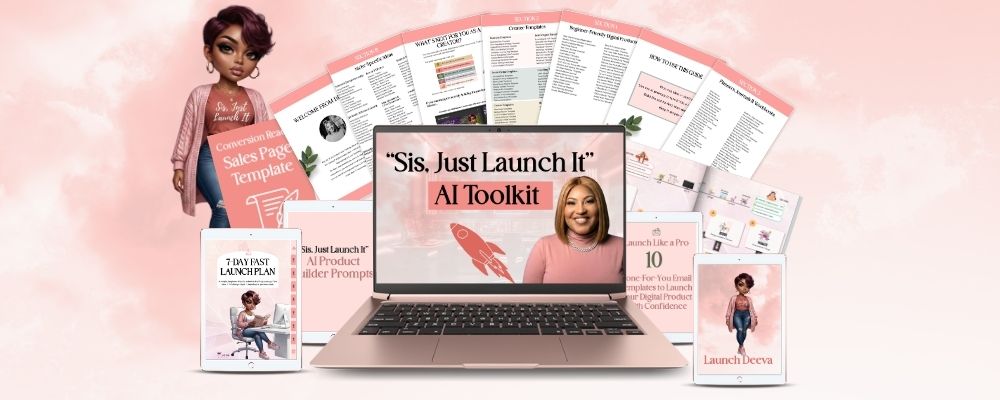
This is where something like the Sis, Just Launch It AI Toolkit becomes clutch. Instead of stressing about what to teach each week or how to structure your sessions, you can use AI prompts to quickly outline your content, generate discussion questions, and create session descriptions. It takes the “what do I say” panic out of going live and helps you show up prepared without spending hours planning.
The mistake most people make is that they build their Skool community in secret, get everything perfect, and then launch to… crickets.
You need to flip that. Build demand BEFORE you build the thing.
✅ Start teasing your community 2-3 weeks before launch. Post on social media about what you’re creating. Share behind-the-scenes glimpses of the structure, the topics you’ll cover, the transformation you’re promising.
Don’t reveal everything—create curiosity. Hint at what’s coming without giving away the full picture. Make people lean in and want to know more.
✅ Set up a waitlist or “early access” signup. Use something simple like Typeform or Google Forms. Frame it as exclusive early access to something that’s going to be valuable and limited.
For a free community, you can create urgency by saying things like “I’m only accepting the first 200 members so I can give personalized support” or “Join now while it’s free—this might become paid in the future and early members get grandfathered in.”
✅ Share proof of your expertise. Post testimonials from people you’ve helped in other contexts. Show results from your own experience. Give people a reason to trust that what you’re building is worth their time.
The goal? When you finally open those doors, you want a flood of people ready to join immediately. That early momentum creates social proof—when new people see an active, engaged community, they want in too.
I’ve done this with my digital product launches. Build the hype, create the waitlist, deliver on the promise. Same strategy applies to community building.
Getting people into your free community is one thing. Turning them into paying customers? That’s where the real strategy comes in.
You can’t just throw people into a community and hope they eventually buy something. You need to intentionally create a journey that builds trust, delivers results, and naturally leads to your paid offers.
Here’s how to structure your free community for maximum conversions:
Week One Activation Is Everything
The first seven days determine whether someone stays or ghosts. Create a clear onboarding path that gets new members engaged immediately:
When people get a win in the first week, they’re hooked. They trust you can deliver on bigger promises.
Strategic Product Mentions at Natural Touchpoints
Don’t wait until you’re “ready to sell” to mention your paid offers. Weave them into your content naturally when they’re the obvious next step.
For example, if you’re teaching live about creating digital products and someone asks, “How do I actually write the sales page?” that’s the perfect moment to say, “This is exactly what the Sis, Just Launch It AI Toolkit helps with—it gives you prompts to write your sales copy without staring at a blank screen for hours.”
It’s not pushy. It’s helpful. You’re solving a problem they just told you they have.
Build a Culture of Celebrating Wins (Including Paid Product Wins)
Create a dedicated wins wall where members share their progress and results. When someone posts about completing your free challenge, celebrate it. When someone shares they bought your toolkit and launched their product, amplify that.
Seeing other members invest in paid offers and get results makes it feel normal, desirable, and low-risk. Social proof sells better than any sales page.
Exclusive Offers for Community Members Only
Give your community members first access to new products, special discounts, or bonuses they can’t get anywhere else. This rewards them for being in the community and creates FOMO for people watching from the outside.
“I’m launching this new template bundle next week, but my Skool community gets it 48 hours early with a 25% discount” is powerful positioning.
Let’s talk about what you’re actually selling inside your free community.
You’re not building a subscription model here—you’re building a product ecosystem. And that means your revenue comes from multiple sources instead of just monthly recurring payments.
Here’s how I’m thinking about pricing:
Digital Products at $27-$97: These are your quick-win offers. Templates, guides, toolkits, mini-courses. Priced low enough that it’s an easy yes, valuable enough that people see immediate results.
Signature Courses or Programs at $297-$997: Your deeper transformation offers. Multi-week programs, comprehensive courses, group coaching experiences. These are for members who’ve gotten results from your free content and smaller products and are ready to go all-in.
VIP or High-Touch Services at $1,000+: One-on-one support, VIP intensives, mastermind access. Reserved for members who’ve been around, know your work, and want direct access to you.
The beauty of this model? You’re not dependent on subscription churn. Someone can buy your $47 template this month, your $497 course in three months, and join your $2,000 mastermind next year. You’re building customer lifetime value instead of just fighting to keep monthly subscribers.
And here’s the thing—when you’ve built trust through free value, people WANT to buy from you. They’re not skeptical. They’re excited. They’ve seen what you can do and they want more.
Alright, let’s make this real. Here’s what you actually need to do to launch your free Skool community and start building toward revenue:
Step 1: Define Your Core Transformation
What’s the one specific outcome your community will help people achieve? Get clear on this. It’s your north star for all content and offers.
Step 2: Map Out Your First Month of Live Content
You don’t need a year’s worth of content planned. Just outline 4-6 live teaching sessions that deliver on your core transformation. Keep it simple and actionable.
Step 3: Create Your Waitlist or Hype Campaign
Build demand for 2-3 weeks before launch. Tease what’s coming, share proof of your expertise, and collect emails of people who want early access.
Step 4: Set Up Your Skool Community Structure
Create your main sections (welcome, classroom for replays, wins wall, discussion areas). Don’t overcomplicate it. You can always add more later.
Step 5: Plan Your First Paid Offer
Even before you launch the community, know what you’ll eventually sell. This helps you structure free content that naturally leads to that offer.
Step 6: Launch to Your Waitlist First
Open doors to early access members first. Let them create the initial momentum and social proof before you open to the wider public.
Step 7: Show Up Consistently and Pay Attention
Go live when you said you would. Engage with members. Watch what questions come up. Let their needs guide your content and your paid offers.
The difference between people who successfully build profitable communities and people who just keep planning? The first group launched before everything felt perfect.
You don’t need a polished course library. You don’t need thousands of followers. You don’t need complicated tech or fancy branding.
You need clarity on your transformation, commitment to showing up consistently, and the guts to start before you feel ready.
**If you’re ready to stop overthinking and actually build this thing, the Sis, Just Launch It AI Toolkit can help you move faster.** Use it to outline your live sessions, create your community messaging, write compelling posts that drive engagement, and brainstorm your product offers—all without spending weeks staring at blank screens wondering what to say next.
Your free community members are out there right now, looking for exactly what you know how to teach. The question is… will you launch it this month, or will you still be perfecting the plan six months from now?

Digital Product AI Creator & Mentor