

Five months ago, I started my Skool community free. Then I switched to paid. Then I switched back to free with a freemium model that’s actually making me money without the burnout.
Plot twist, right?
Here’s the thing nobody talks about when they’re teaching you how to build online communities: there’s no one-size-fits-all model. The “experts” will tell you to start free and convert to paid, or start paid from day one, or build a massive free community and sell high-ticket in the backend. And they’re all right. And they’re all wrong.
Because what works depends entirely on your business model, your offer structure, and honestly—what you can actually manage without losing your mind.
Let me walk you through my entire Skool journey—the pivots, the mistakes, the “oh crap” moments, and what finally clicked. Because if you’re sitting there wondering whether to charge for your community or keep it free, this is going to save you months of trial and error.
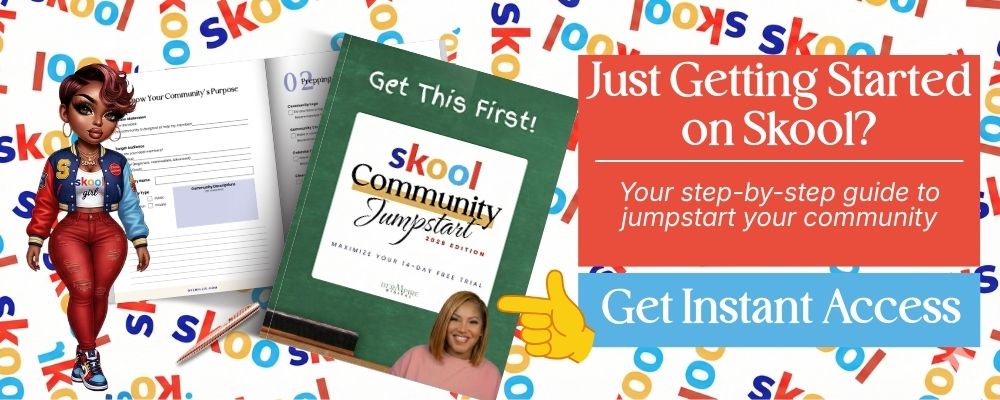
When I first launched the Digital Creator Society on Skool, I did what everyone else was doing. I started it free.
The logic made sense at the time. Every community builder and their mother was preaching the same gospel: build your free community first, get the numbers up, prove the concept, filter people into paid later. Don’t reinvent the wheel. Do what works.
So I moved my entire Facebook group over to Skool. Fresh platform, better features, cleaner interface. I was pumped.
And honestly? It was easier to get members when it was free. People love free stuff. Within a couple of months, I had about 40 members joining organically—no ads, just real people interested in digital product creation.
But then reality started setting in.
Here’s what nobody warns you about when you’re running a free community:
The spam is relentless. I started getting screenshots from my loyal members showing me DMs from randos pitching agency services, MLM schemes, and coaching programs. These weren’t even people who knew what I did—one person tried recruiting me into an agency program when I clearly don’t run an agency.
You attract browsers, not builders. A lot of people joined just to lurk and extract information without ever engaging, implementing, or investing in their own growth. They wanted all the knowledge with zero skin in the game.
You hold back your best stuff. This was the killer for me. I caught myself thinking, “I can’t share that in the free community” or “That’s too valuable to give away.” Which meant I wasn’t showing up at my highest level because I was worried about giving too much away for free.
Meanwhile, I’m paying Skool’s monthly fee to host all of this.
Something had to change.
After a few months of managing the free community, I made a decision. I was going paid.
I announced it to my members, gave them a deadline, and explained exactly why. I was about to pack serious value into this community—trainings, templates, resources, live calls—and I needed people who were actually invested in their success.
On switchover day, I removed all the free members and relaunched at $27/month or $297/year.
Some people came back immediately. They’d been watching, they’d seen the value I was building, and they were ready to invest. These were my people.
And then… growth basically stopped.
Don’t get me wrong—the quality was incredible. The people who joined were serious. They showed up, asked great questions, implemented what they learned. But the numbers? Barely moving.
I had created this amazing hub—moved my entire $500 Etsy Seller Mastery training in there, my Gender Party Printables course ($97 standalone), my T-Shirts on Autopilot program, Canva templates, digital assets, the whole works. It was insane value for $27/month.
But here’s what I learned: just because you build it doesn’t mean they’ll come. Especially when there’s a paywall at the front door.
This is where the real lesson happened.
I sat with it for a while. Analyzed what was working and what wasn’t. Looked at my actual business goals. And realized something important: I didn’t need a paid community. I needed a business ecosystem that actually made sense.
So I switched back to free. But not the same free as before.
I implemented a freemium model. And this changed everything.
Here’s how it works now:
The Builders Community is free. Anyone can join, anyone can access the foundational content, anyone can be part of the conversations. This is where people discover me, connect with the vibe, and decide if they want to go deeper.
The Academy is where the implementation happens. This is the paid tier—where the real trainings live, where the downloadable resources are, where I show up for live strategy calls and workshops.
Skool’s calendar gating is the secret weapon. Here’s the genius part: Skool allows me to gate calendar events and live calls. So people in the free Builders Community can see that I’m doing live workshops, Q&A sessions, and implementation calls, but they can’t join unless they’re Academy members.
This creates natural urgency without being pushy. People see the value happening in real-time, and they choose to upgrade when they’re ready.
Let me break down why this structure is working way better than either pure free or pure paid:
It’s a natural filter. The free community attracts people who are curious. They can explore, ask questions, get a feel for my teaching style. The ones who are serious about implementation naturally gravitate toward the Academy.
It eliminates the spam problem. I’m not managing two separate communities anymore. It’s one community with two tiers. Way less administrative headache, and the free members create a buffer against the random spammers because there’s already an active community culture.
I can show up fully in both spaces. In the Builders Community, I share freely without holding back. I’m not worried about “giving too much away” because I know the people who want deeper implementation will upgrade. In the Academy, I go even deeper with specific frameworks, templates, and personalized support.
The calendar gating creates FOMO (the good kind). When free members see that I’m hosting a live workshop on “How to Validate Your Digital Product Idea in 48 Hours” and they can’t access it, they either upgrade or they realize they’re not actually ready to implement. Either way, it’s self-selecting.
It aligns with how people actually buy. Most people don’t join a paid community cold. They need to know, like, and trust you first. The free tier builds that relationship. The paid tier is the natural next step for people who are ready to invest in results.
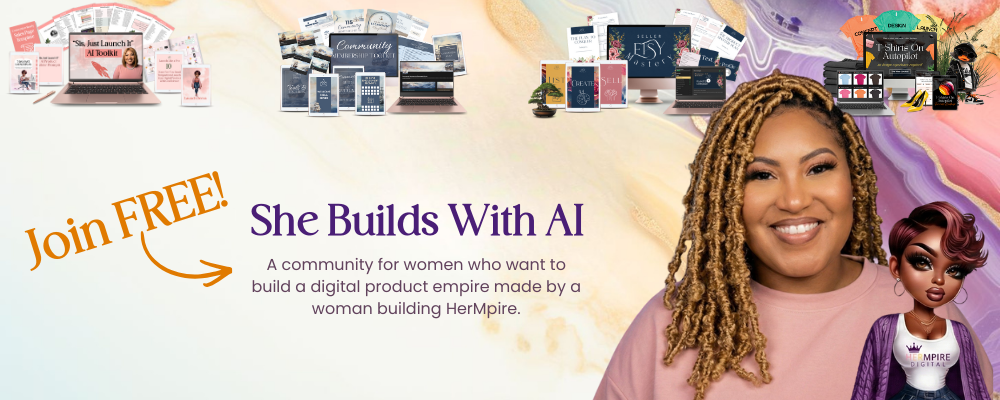
If you’re thinking about implementing a freemium model for your own Skool community, here’s what I learned about setting it up strategically:
Get clear on what’s free vs. paid. This is crucial. In my Builders Community (free), people get access to foundational content, community discussions, and the vibe. In my Academy (paid), they get the full training library, downloadable resources, live calls, and direct access to me.
Use the calendar strategically. Schedule regular live events that are Academy-only. This shows free members what they’re missing without being salesy about it. They see the value happening in real-time.
Make the upgrade path obvious. Don’t make people hunt for how to join the Academy. It should be clear, simple, and easy to say yes when they’re ready.
Price the paid tier appropriately. I kept my Academy at $27/month because it’s accessible enough that serious people will invest, but it’s not so low that it feels cheap or attracts the wrong people.
Set clear expectations for both tiers. Free members know they’re getting community and foundational content. Paid members know they’re getting implementation support and resources. No confusion, no resentment.
Here’s what I realized through all of this: your community structure has to support your actual business model, not some guru’s blueprint.
For me, the freemium model works because:
I have multiple revenue streams. I’m not relying solely on community memberships to make money. I have five Etsy shops, digital products, and other offers. The Academy is one piece of a bigger ecosystem.
I want to build long-term relationships. The free community lets people get to know me over time. They binge my content, see my approach, and decide if it resonates. By the time they join the Academy, they’re already bought in.
I value accessibility. I genuinely believe in making knowledge accessible. But I also believe in valuing expertise and implementation. The freemium model honors both of those values.
I can use YouTube as my search engine traffic. YouTube is where people discover me through search. My free Skool community is where they deepen the relationship. The Academy is where they get results. It’s a natural funnel that doesn’t feel forced.
This is where the Sis, Just Launch It AI Toolkit fits perfectly into the ecosystem. Some people join the Builders Community and realize they need help getting started—like, right now. They don’t want to wait for the next live Academy workshop. They need prompts, frameworks, and guidance to launch their first product this week. The toolkit gives them that immediate support while they’re deciding if the Academy is their next step.
It’s another entry point into the ecosystem that serves people exactly where they are. Some buy the toolkit and never join the Academy. Some join the Academy and later grab the toolkit for specific launch support. Both paths work because they’re solving real problems for real people.
If I could go back to day one of launching my Skool community, here’s what I’d say:
Stop following someone else’s blueprint. What works for a course creator with a huge email list won’t work the same way for you. Build the model that makes sense for YOUR business and YOUR life.
Test and iterate faster. I spent months in each model before pivoting. You don’t need to do that. Give something 30-60 days, look at the data, and adjust. Speed matters.
Free doesn’t mean low-value. Your free content can (and should) be genuinely valuable. That’s what builds trust. Just make sure your paid tier offers something significantly deeper—implementation, access, resources, or results.
Community isn’t your only revenue stream. Unless you’re building a massive membership business, your community should support your ecosystem, not carry it. It’s a relationship-building tool that leads to multiple monetization paths.
The right people will invest. When you create real value and make the upgrade path clear, the people who are serious about results will say yes. Stop worrying about the people who won’t—they’re not your customers anyway.
Here’s what my Digital Creator Society looks like now:
Builders Community – SBwAI (Free):
Academy (Paid – $27/month or $297/year):
The free community has grown steadily because there’s no barrier to entry. The Academy conversions happen naturally when people realize they want the implementation support and resources.
And I’m not managing two separate communities or dealing with the spam and energy vampires from before. The structure itself filters people into the right place.
Not everyone should do a freemium model. Here’s how to know if it makes sense for your business:
You have (or want to build) multiple revenue streams. If community membership is your only income source, you might need a fully paid model. But if you’re selling products, courses, services, or other offers, freemium can feed those revenue streams beautifully.
You value relationship-building. Freemium works when you’re playing the long game. You’re building trust over time, not trying to convert everyone immediately.
You have a clear differentiation between free and paid. If you can’t articulate what paid members get that free members don’t, you’ll struggle. The value proposition for upgrading needs to be crystal clear.
You’re comfortable with slower paid growth. Free members will join faster than paid members upgrade. If you need immediate cash flow, this might not be your model. But if you’re building for sustainability, it works.
You can leverage other platforms for discovery. I use YouTube as my top-of-funnel discovery platform. People find me there, then join the free community, then upgrade to the Academy. If you don’t have another discovery channel, pure paid might make more sense.
After five months of testing every model, here’s what I know for sure: there’s no “right” answer. There’s only what works for your specific business, your specific audience, and your specific goals.
For me, the freemium model hit the sweet spot. I get to build relationships through the free Builders Community, create transformation through the paid Academy, and maintain my sanity by having one unified ecosystem instead of managing multiple separate spaces.
Could I grow faster with a different model? Maybe. Would I enjoy it as much? Probably not.
The Builders Community will always be free because I believe in accessibility and relationship-building. The Academy will always be paid because I believe in valuing expertise and implementation. And the two working together create something way more powerful than either one alone.
If you’re building your own community or trying to figure out your business model, the Sis, Just Launch It AI Toolkit can help you think through these strategic decisions. Instead of spending months testing different models like I did, you can use the AI prompts to map out your ecosystem, clarify your pricing strategy, and build a business structure that actually makes sense for YOU.
You’ll get prompts for designing your offers, structuring your community tiers, positioning your paid programs, and making confident decisions without second-guessing yourself into paralysis. Because the fastest way to figure out what works is to get clear on what you’re actually building—and then test it in the real world.
Your community should energize you, not drain you. Whether that’s free, paid, or freemium depends entirely on what you’re building and who you’re serving.
Just don’t be afraid to pivot when something isn’t working. The best business model is the one you’ll actually stick with.

Digital Product AI Creator & Mentor